Travel Blog

Travel News

Sustainable Inca Trail Conservation Guidelines

A sustainable tourism project by Travel on Green — protecting the Qhapaq Ñan and the Machu Picchu Historic Sanctuary

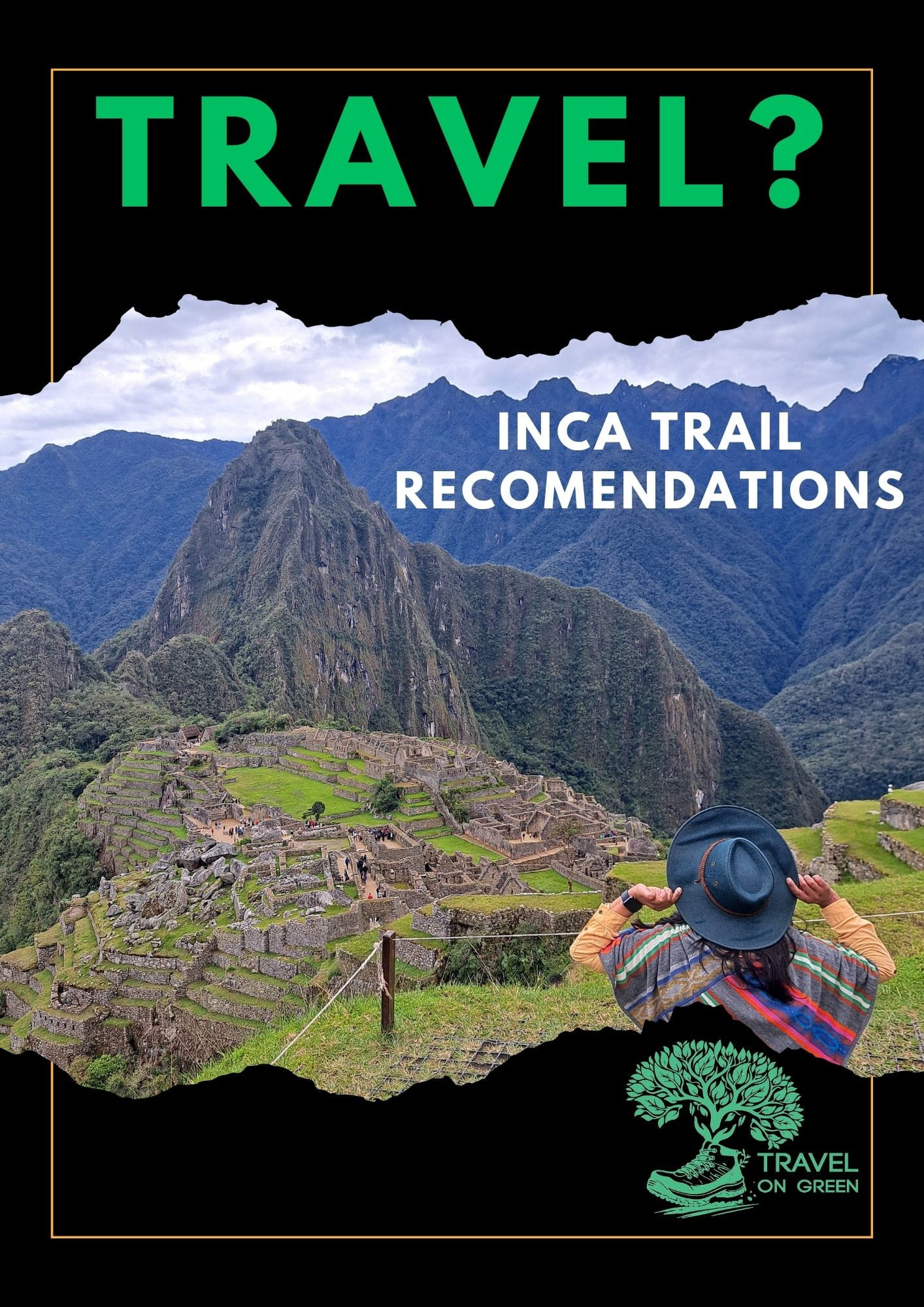
The Inca Trail is one of the most beloved trekking routes in the world, and one of the most fragile. It crosses cloud forest, high-Andean grasslands and stone-paved Inca roads inside the Machu Picchu Historic Sanctuary, a protected natural and cultural area managed in Peru by SERNANP together with the Ministry of Culture. Every footstep matters here.

At Travel on Green we believe a great trek and a protected trail go together. This project explains the conservation rules that guide the route, how we apply them on every departure, and how you can help.

  • SERNANP (Peru’s National Service of Protected Natural Areas) oversees the conservation of the Sanctuary’s ecosystems, its wildlife and its management plan.
  • The Ministry of Culture protects the archaeological heritage: Inca roads, terraces, tunnels and sites.
  • Licensed operators and guides are responsible for applying these rules in the field, and we take that responsibility seriously.

1. Limited access

Daily entry to the Inca Trail is capped, and permits are issued per person, in advance, through authorized operators. Limits keep erosion, noise and pressure on wildlife within what the ecosystem can bear. The trail also closes each year for maintenance and natural recovery, so plan your dates around it.

2. Small groups, trained guides

Groups are kept small and always accompanied by licensed guides who brief every traveler on the rules, the history and the environment before the trek begins.

3. Stay on the path

Walk only on marked routes and use designated campsites. Shortcuts damage vegetation, accelerate erosion and can harm the Inca stonework. Trekking poles must have rubber tips to protect the stone paths.

4. Pack in, pack out

Nothing is left behind. We avoid single-use plastics, carry reusable bottles and containers, and bring all waste out of the Sanctuary for proper disposal. Toilets and designated facilities are used at every camp.

5. Respect wildlife and plants

Spectacled bears, Andean cock-of-the-rock, orchids and many endemic species live along the route. Do not feed animals, collect plants or stones, or disturb nests. Drones are not permitted.

6. Protect the archaeology

Do not climb on, lean against or write on any Inca structure. Touching sites less, photographing more, is the golden rule.

7. Fire and smoke

Open fires are not allowed. Cooking is done on controlled stoves by our kitchen team, and smoking is avoided throughout the Sanctuary to prevent wildfire.

The trek exists thanks to the Andean people who carry equipment and cook along the way. Responsible tourism means:

  • Fair pay, proper equipment, meals and rest for every porter and cook.
  • Respecting the legal weight limit for loads carried by porters.
  • Hiring locally and working with communities along the route.
  • Treating every team member as a partner, not as support staff.
  • Run every departure under current SERNANP and Ministry of Culture regulations.
  • Brief all travelers on Leave No Trace principles before day one.
  • Reduce single-use plastics and manage all waste on the trail.
  • Support fair working conditions for our porters and cooks.
  • Keep groups small and guides well trained in conservation.
  1. Book with an authorized operator and respect your permit dates.
  2. Bring a reusable bottle, a rubber-tipped trekking pole and biodegradable toiletries.
  3. Stay on the trail and follow your guide’s instructions.
  4. Take only photographs; leave only footprints.
  5. Tip your team fairly and learn a few words of Quechua.

Zero Trace on the Trail: Solid Waste Management

A sustainable tourism project by Travel on Green — keeping Cusco’s trails, mountains and communities clean

A single multi-day trek generates food packaging, bottles, batteries, hygiene products and kitchen scraps. In a high-altitude environment, where cold slows decomposition and rain carries pollution into rivers and cloud forest, even small amounts of litter last a long time. Many routes in Cusco cross protected areas managed by SERNANP, where waste rules are stricter than in the city.

Our goal is simple: everything we bring in, we bring out, and as little as possible comes in at all.

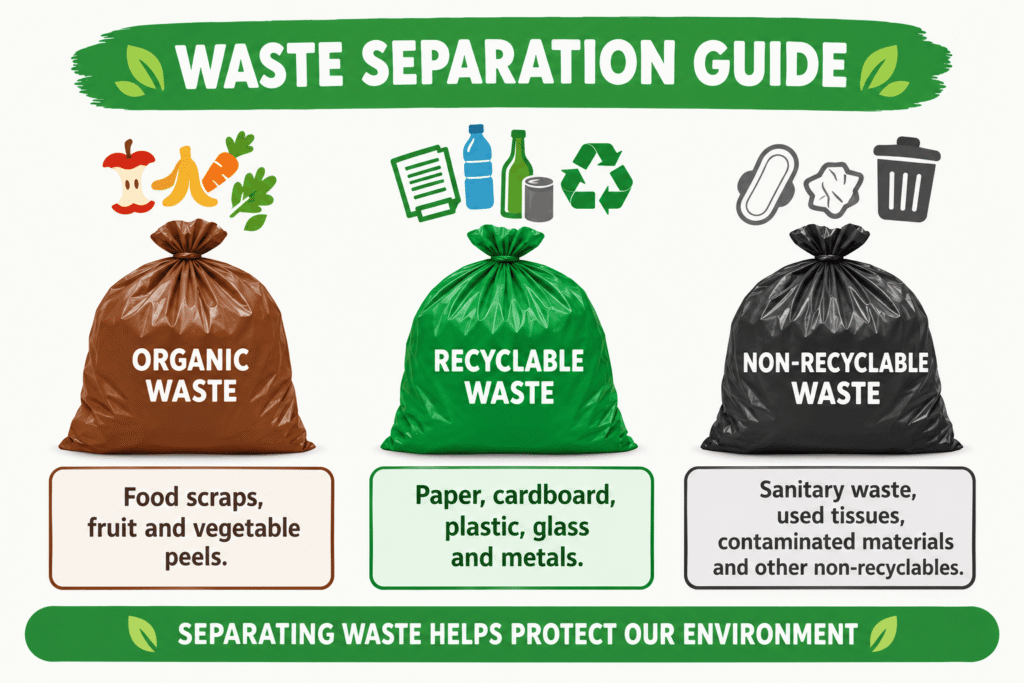
  • On every Travel on Green departure, waste is separated at the source into three colors, following the color code used in Peru’s solid waste management standards.

    Green bag — recyclables

    Clean, dry materials that can be recovered and reused.

    • Plastic bottles and containers (rinsed)
    • Paper and cardboard
    • Glass and metal cans
    • Clean packaging

    Brown bag — organic waste

    Biodegradable material from the kitchen and camp.

    • Fruit and vegetable peels
    • Leftover food and coffee grounds
    • Tea leaves and eggshells

    Black bag — non-recyclable waste

    Everything that cannot be recovered or composted.

    • Used tissues and napkins
    • Dirty or greasy wrappers and soiled paper
    • Sweepings and mixed waste
    • Anything you are unsure about

    Hygiene waste: used toilet paper and sanitary products are never left on the trail. They go in sealed bags and are carried out with the rest of the non-recyclable waste.

  1. Before departure: guides brief every traveler on the three colors and hand out a small personal bag for snacks and wrappers.
  2. At each camp: the kitchen team sets up three clearly labeled bags and keeps them closed and away from wildlife.
  3. During the day: travelers keep their own waste with them and hand it over to the guide at the next stop.
  4. Leaving camp: the team does a final sweep of the campsite so nothing remains behind.
  5. End of the trek: waste is carried out of the Sanctuary and delivered to authorized collection and disposal points.

The best waste is the waste that never exists.

  • Use a reusable water bottle and refill from treated or boiled water.
  • Avoid single-use plastics and individually wrapped snacks.
  • Repack food into reusable containers before leaving Cusco.
  • Choose biodegradable toiletries and bring reusable cutlery.
  • Provide labeled bags in the three colors on every departure.
  • Train guides, cooks and porters in correct segregation.
  • Keep waste secured and never bury, burn or leave anything on the trail.
  • Weigh or estimate waste at the end of each trek to track and reduce it over time.
  • Deliver waste only to authorized disposal or recycling points.
  1. Learn the three colors before you start walking.
  2. Rinse and dry recyclables when you can.
  3. Never throw organic waste into the forest, even if it seems harmless.
  4. Pick up litter you find, whoever left it.
  5. Ask your guide whenever you are unsure which bag to use.

Safe Trekking, Protected Nature: Traveler and Environmental Safety Guidelines

A sustainable tourism project by Travel on Green — aligned with the visitor guidelines of SERNANP for the Machu Picchu Historic Sanctuary

A single multi-day trek generates food packaging, bottles, batteries, hygiene products and kitchen scraps. In a high-altitude environment, where cold slows decomposition and rain carries pollution into rivers and cloud forest, even small amounts of litter last a long time. Many routes in Cusco cross protected areas managed by SERNANP, where waste rules are stricter than in the city.

Our goal is simple: everything we bring in, we bring out, and as little as possible comes in at all.

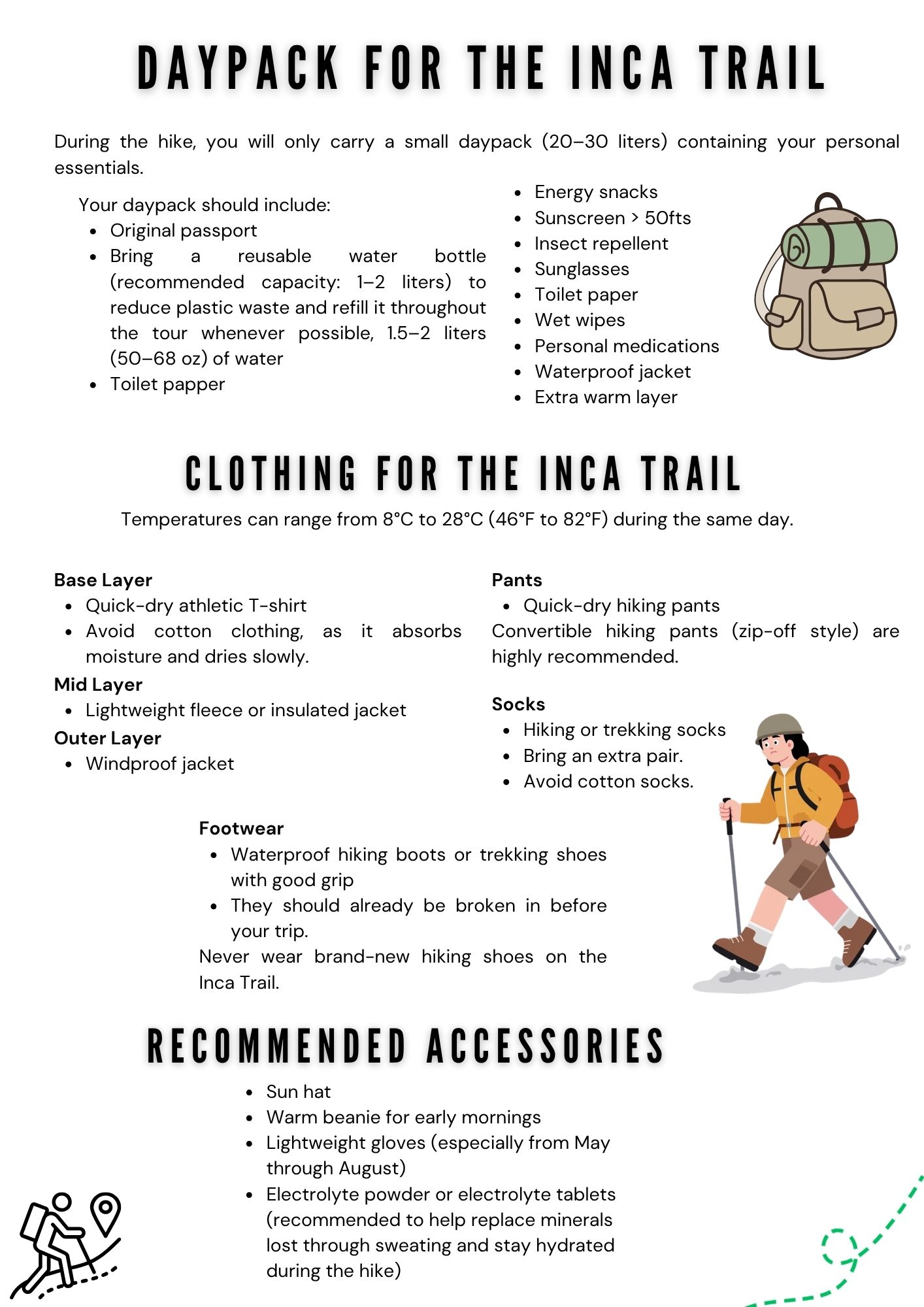
  • Permits and documents: trail permits are personal and tied to your passport details, so the name on your booking must match your passport exactly. Carry your original passport on the trek.
  • Travel insurance: we recommend a policy that covers trekking at altitude and medical evacuation.
  • Health check: if you have a heart, lung or other medical condition, talk to your doctor before booking and tell us in advance.
  • Acclimatization: spend at least two nights in Cusco or the Sacred Valley before the trek. Cusco sits at about 3,400 m (11,150 ft) and the trail reaches over 4,200 m (13,800 ft).
  • Fitness: train with long walks and stairs for several weeks before your departure.

Altitude

Altitude sickness can affect anyone, regardless of fitness. Walk slowly, drink water often, eat well and rest when you need to. Tell your guide at once if you feel headache, nausea, dizziness or shortness of breath. Our guides are trained to recognize symptoms and decide when to descend. Coca tea is a local tradition, but it should not be relied on as a remedy for altitude sickness.

Weather

Weather in the Andes changes quickly, and the rainy season (roughly November to March) brings mud, slippery stone and river crossings. Pack layers, a waterproof jacket and good boots with grip. The trail is closed each year for maintenance and natural recovery.

Terrain

The trail has steep stone steps, narrow sections and long descents. Use trekking poles with rubber tips, which protect both your knees and the Inca paving, and keep to the marked path.

Water and food

Drink only treated or boiled water provided by our team. Our cooks follow strict food-handling practices at every camp. Let us know about any allergies or dietary needs before departure.

Sun and cold

UV radiation is intense at altitude, even on cloudy days. Use sunscreen, sunglasses and a hat. Nights in camp can drop close to freezing, so bring a warm sleeping bag and thermal layers.

  • Every group travels with licensed guides trained in first aid and altitude response.
  • Guides carry a first-aid kit, and oxygen is available on treks where required.
  • Guides keep communication equipment and know the evacuation points and emergency contacts along the route.
  • We keep your emergency contact and medical information confidential and use it only if needed.
  • If a traveler cannot continue, a team member accompanies them down safely.
  • Stay on the trail: shortcuts cause erosion and put you at risk of falls.
  • Fire safety: open fires are not allowed. Cooking is done on controlled stoves, and smoking is avoided throughout the Sanctuary to prevent wildfire.
  • Wildlife: keep your distance, never feed animals and store food securely. Spectacled bears and other species are best seen from afar.
  • Waste: everything is sorted into green, brown and black bags and carried out of the Sanctuary.
  • Sanitation: use the designated toilets at each camp so streams and soil stay clean.
  • Noise: speak softly and avoid speakers so wildlife and other trekkers can enjoy the quiet.
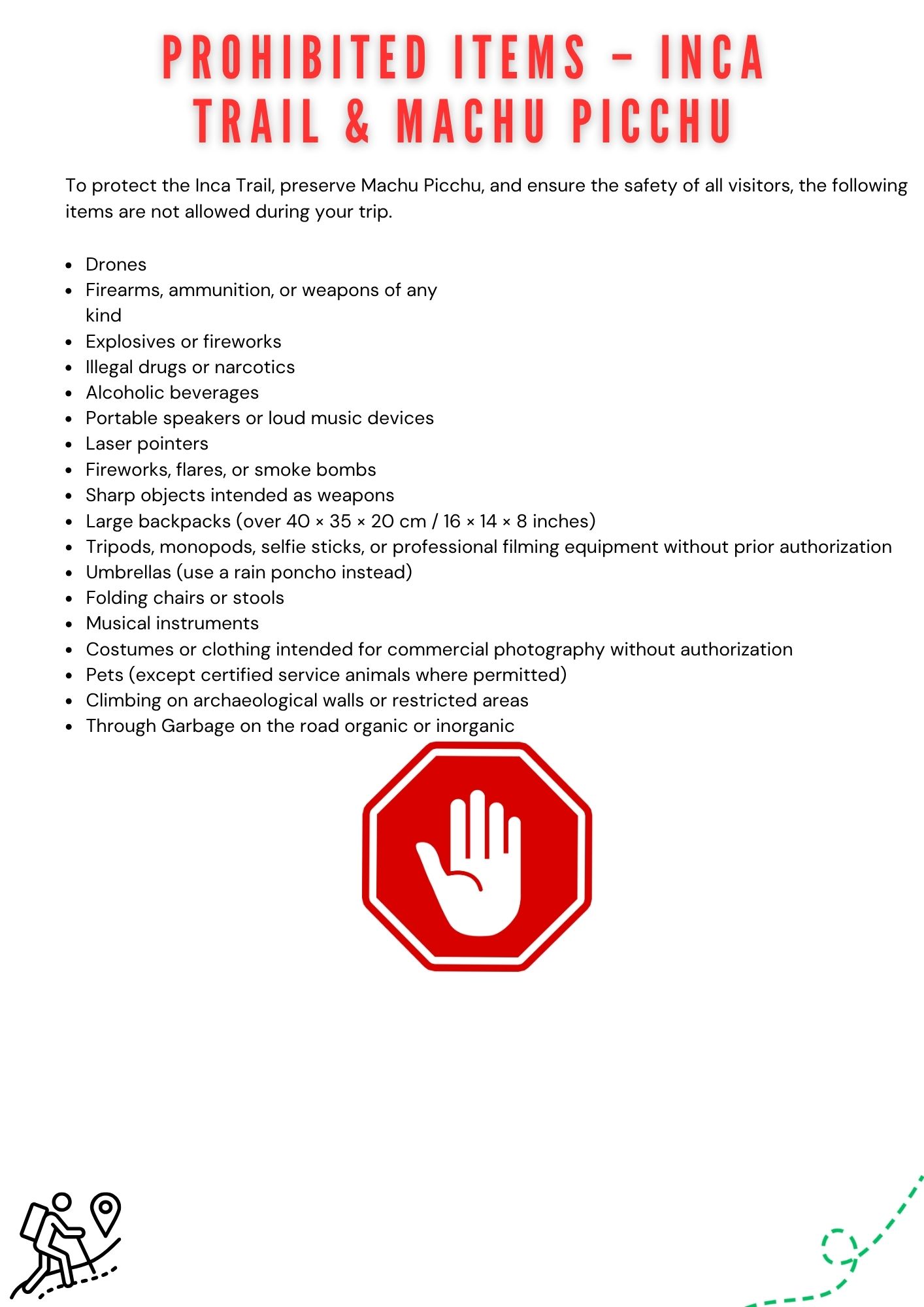
  • Drones and equipment: drones are not permitted in the Sanctuary.
  1. Do not climb on, lean against or write on any Inca structure.
  2. Treat porters, cooks and local communities with respect and ask before taking photos of people.
  3. Follow your guide’s instructions at archaeological sites, where rules protect fragile stonework.
  1. Arrive in Cusco early to acclimatize.
  2. Follow your guide’s instructions at all times.
  3. Report any health problem or injury right away.
  4. Pack light, pack smart and bring a reusable water bottle.
  5. Leave no trace: carry out everything you carry in.